
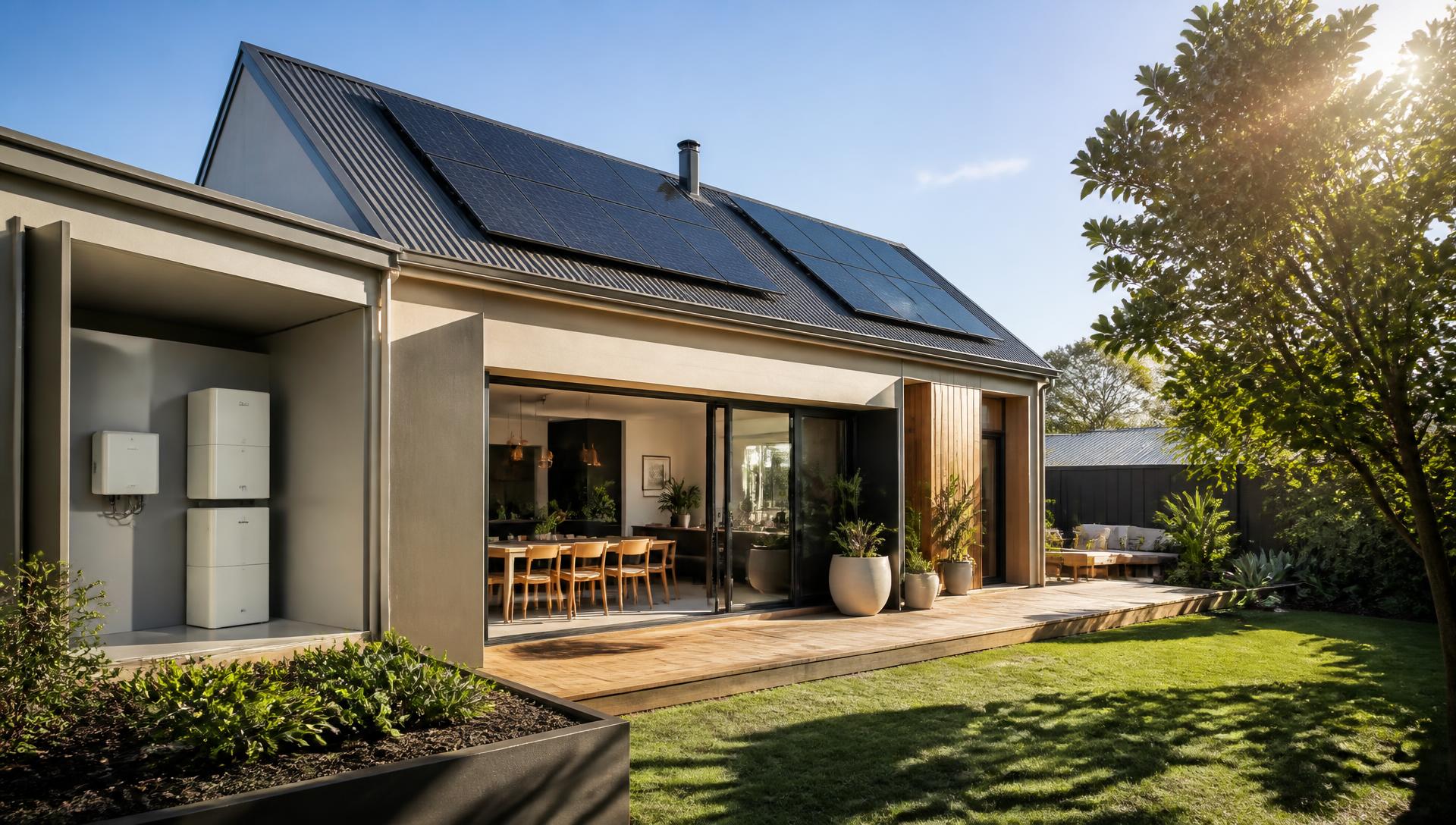
Victoria's electricity story is shaped heavily by winter. Melbourne and much of regional Victoria carry a heating-dominant load profile, with gas and electric heating running for months at a time, and shorter winter days that reduce the solar generation window compared with the shoulder seasons and summer. For a household considering a battery, this means the load-and-generation balance that matters most may not be the sunny summer afternoon shown in a sales brochure, but a grey, cold July evening with the heating running from 5pm.
Shoulder-season solar and battery value
Spring and autumn in Victoria often produce strong, consistent solar generation without the extreme heat-driven air conditioning load of summer, which can leave a healthy daily surplus available for a battery to store. Summer, by contrast, can see air conditioning consume much of the day's solar generation in real time, leaving less surplus to store. A realistic assessment of battery value in Victoria should look at generation and consumption across all four seasons using interval data, rather than assuming one season is representative of the whole year.
Victorian Energy Upgrades (VEU) context
Victoria's Victorian Energy Upgrades (VEU) program creates financial incentives for a range of energy-efficiency upgrades, including efficient hot water and heating/cooling equipment, delivered through accredited providers. VEU does not directly cover battery storage in the way it covers appliance upgrades, but it's relevant to the broader household energy picture: a home that has already reduced its heating and hot water load through a VEU-supported upgrade will generally have a smaller, more predictable evening load for a battery to serve, which can improve the case for a smaller, better-matched system rather than an oversized one.
Five distributors, five sets of local rules
Victoria is unusual in having five separate electricity distributors | CitiPower, Powercor, Jemena, United Energy and AusNet Services, each covering different parts of Melbourne and regional Victoria. Export limits, connection requirements and the technical process for approving a solar-plus-battery system can differ between these networks, even for two houses only a short drive apart. This is a genuinely practical consideration: an installer working across metro Melbourne needs to check which distributor applies to a specific address before finalising a system design, rather than assuming statewide rules.
The federal battery program in Victoria
The federal Cheaper Home Batteries Program applies in Victoria on the same national basis as elsewhere, providing an upfront, installer-applied discount on eligible battery installations that scales with capacity within program rules. Victorian households considering a battery should treat this federal mechanism as the primary incentive to check eligibility for, and then ask their installer whether any additional Victorian program activity is relevant to the rest of their project, such as a hot water or heating upgrade running alongside the battery installation.
For most Victorian households, the practical path to an answer is the same one that applies everywhere: pull interval data covering at least a full year, understand how heating load shifts the evening peak in winter, confirm which of the five distributors applies to the property, and size the battery to the load pattern that actually shows up in the data rather than a single assumed season.
Run your own numbers
Home Battery Savings Calculator
Take what you've just read and model it against your own property, free, no details required.
This article is general information, not financial or electrical advice. Program rules and eligibility change, confirm current settings with the relevant scheme or your Esena engineer before making decisions. Last reviewed: August 2026.